How Automated Fertigation Systems Improve Nutrient Efficiency in Agriculture
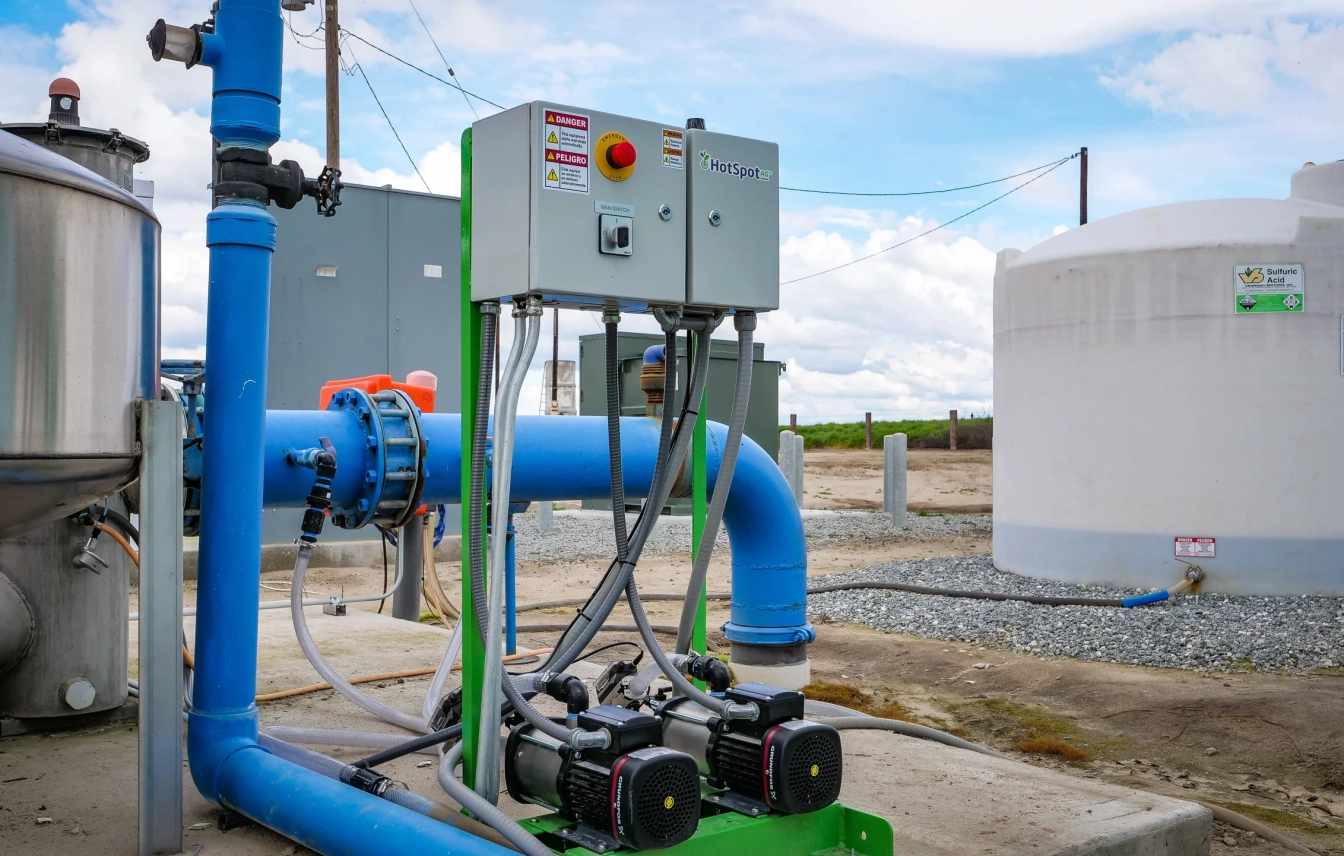
Maximizing nutrient efficiency is crucial for sustainable crop production. Automated fertigation serves as a powerful tool for optimizing nutrient management by integrating irrigation and fertilization processes that can be controlled remotely. These automated fertigation systems can offer you simplified control over nutrient application, leading to improved crop yields, cost-reduction, and reduced environmental impact.
What is Fertigation and Nutrient Management:
Fertigation consists of the combination of irrigation and fertilization, allowing growers to apply nutrients directly to the root zone of crops through the irrigation system. This targeted delivery ensures efficient nutrient uptake by plants while minimizing leaching and runoff losses. Effective nutrient management involves grower knowledge of the “4 Rs”: right source, right rate, right place, and right time. These principles serve as a guide for growers to select the appropriate fertilizer source, applying the correct rate of nutrients, placing them where they are most accessible to plants, and timing applications to coincide with crop needs.
How Does the 4 R’s Fit into Nutrient Management:
The “4 Rs” framework provides a systematic approach to fertigation, ensuring that growers make informed decisions to optimize nutrient use efficiency.
The right source refers to selecting fertilizers that meet the specific nutrient requirements of crops and soil conditions. It’s important to understand the different considerations that come into play when identifying the right source, such as soil conditions, fertilizer delivery complications, product price, environmental risks, plant nutrition requirements, and economic constraints.
The right rate involves applying nutrients at rates tailored to crop needs and soil fertility levels. This means that each site should have a specific amount of nutrient application that should not be copied from other sites. Essentially, coordination of crop needs and supplied nutrient sources are necessary in determining the correct amount of seasonal supply.
The right place entails targeting nutrient applications to the root zone of crops, where they are most accessible and can be readily absorbed. Concentration of nutrient injection to the root zone supplies nutrients quicker and over a longer period of time. Precise nutrient placement enhances the crops nutrient uptake while minimizing any losses that could potentially happen. Moreover, growers must be cautious about over fertilizing as there is a limit to a root’s ability to quickly absorb nutrients.
This leads to the consideration of finding the right time to fertilize. The right time emphasizes timing nutrient applications to coincide with critical stages of crop growth and development. Knowing the correct supply, quantity, and placement of the nutrients is critical in determining the timing of when to fertilize crops.
Why is it Important to Know the 4 R’s:
Understanding the “4 Rs” is essential for growers to maximize crop productivity while minimizing environmental impact. By following these principles, growers can optimize nutrient use efficiency, reduce fertilizer losses, and enhance soil health. Additionally, adopting the “4 Rs” promotes sustainable agricultural practices by minimizing nutrient runoff and leaching, which can contribute to water pollution and overall degradation of the surrounding environment.
How Automated Fertigation Improves Nutrient Efficiency and Satisfies the 4 R’s:
If you’ve made it this far, you might be more familiar with the 4 “R’s”. There’s a lot of good information on the web and at tradeshows to learn more in depth about the methodology of the 4 “R’s”. In the section below, you will find content that showcases the practical end of automated fertigation and how it relates to the 4 R’s.
Right Source: Work with your CCA on the right fertilizer(s) for your block
An automated fertigation system can’t help you select the right fertilizer source, so consult with your CCA on developing a nutrient plan. Below are some common considerations to include when developing a nutrient plan.
A solid nutrient plan starts with the following questions,
- What are the historical and predicted yields?
- What are the annual leaf micro and macro nutrient trends?
- What nutrients are available in the soil?
- What is the annual water budget and what nutrients (Boron, Nitrate, Calcium, Magnesium, Potassium, etc) are in the water?
- It’s important to know if surface water is available as this water virtually has no nutrients
- What fertilizers are best suited for early in the season vs. middle of the season?
- What fertilizers work within your budget?
Right Rate: Automated Fertigation Systems and Chemical Flow Monitoring
Your CCA will provide you a nutrient management plan, and the portion most important to you will be the number of gallons to inject of each fertilizer.
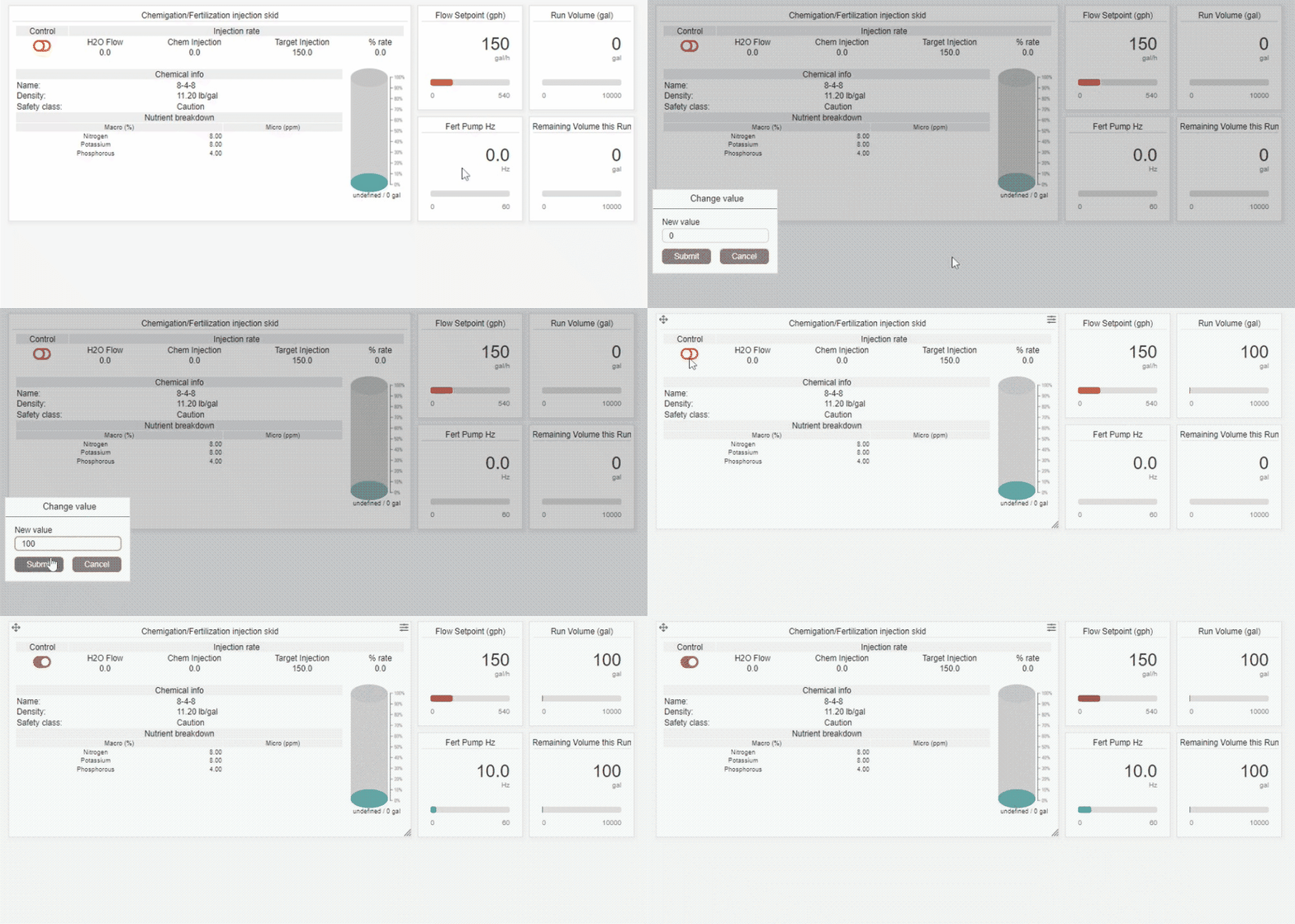
Automated fertigation systems have chemical flow measurement equipment which is critical to executing the nutrient management plan. Automated Fertigation Systems allow users to set a volume to run either via a schedule or a “batch” run, where the user selects the total volume and the injection flow rate (in gallons/hr).
Right Place and Right Time: Injecting at the Right Time of an Irrigation Set and Right Phenological Stage
The CCA will provide the timing of the fertigations alongside with the amount to apply. When fertilizer is injected it is often left to the grower. In general, a good rule of thumb is to start the injection midway through the irrigation set and leave an hour to two hours of water behind the injection set.
There are site specific considerations that add complications to an already complicated topic. If you are running 12-to-24-hour sets, please consult with your CCA on a recommended strategy of when to inject.
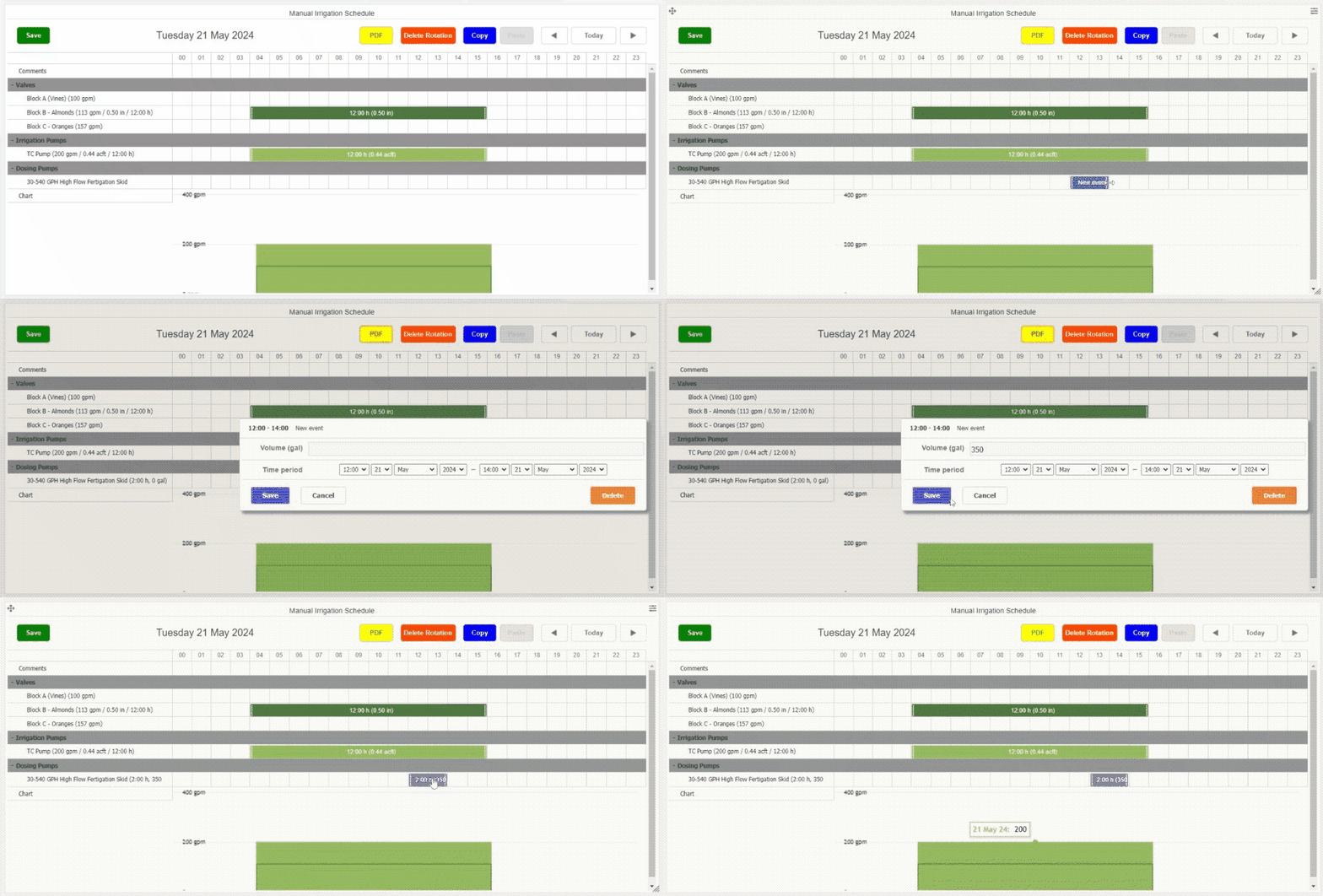
When fertilizer is injected manually, it is typically injected based upon labor convenience. With automation, it can be injected precisely based upon the optimum time to inject. The example below is based on conversations from the grower and CCA on when and how much to inject.
Almond Example
For context: the crop type includes 100 acres of Almonds on sandy ground with 0.042 inch/hr irrigation application rate. The CCA recommended no more than 3.5 gallons/acre of UAN-32 per acre (~12.5 N units/acre) per injection.
The grower scheduled a 12-hour irrigation and set the injection amount for 350 gallons. Since the soil is sandy and UAN32 has the propensity to leach, the start of the injection was ¾ of the way through the irrigation set.
BONUS “R” – Right Reporting
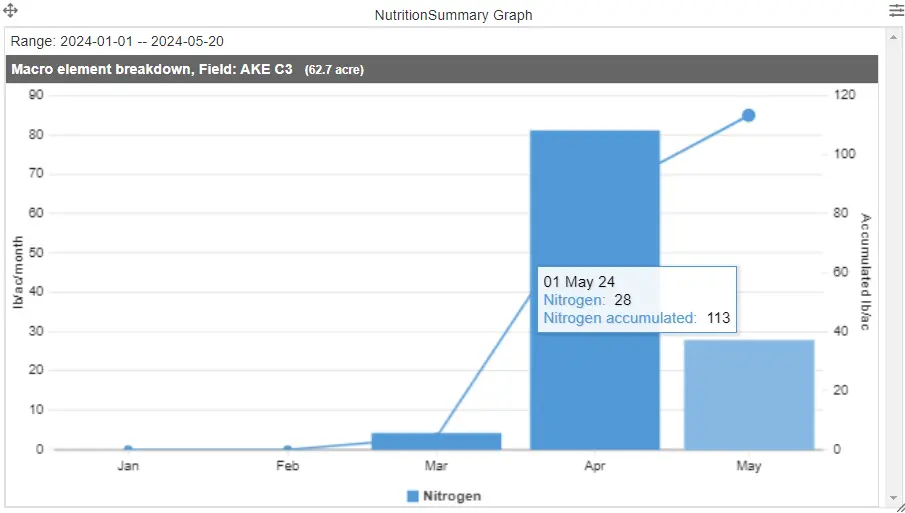
Knowing how much fertilizer has been applied and how it was applied provides the agronomy team with helpful information. This data helps the agronomy team evaluate the effectiveness of fertilization strategies by providing detailed feedback on crop response and soil nutrient levels. With this information, they can optimize future injections to ensure optimal growth and avoid over or under injecting.
Knowing how much NPK that has been applied to date is crucial in following your CCA’s nutrient plan for your crops. Remember that not all crops are the same and nutritional needs will vary.
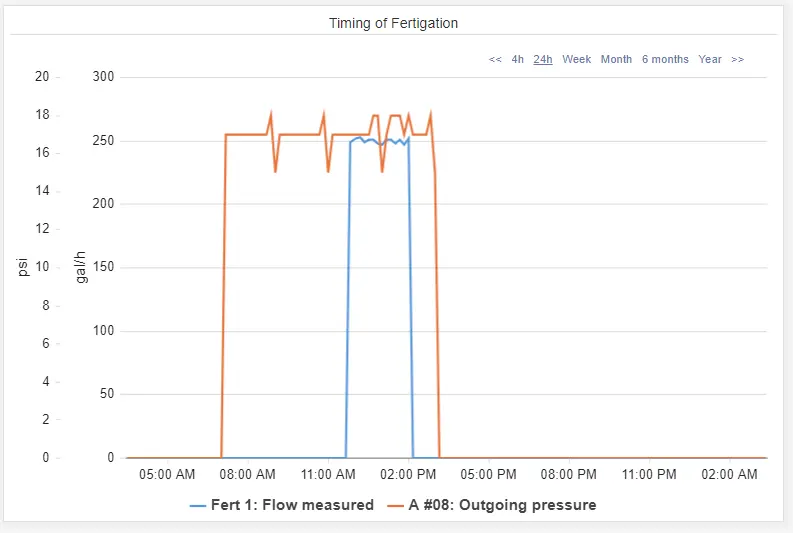
In Figure 3, you can see the data of the Verification of Time Injected during irrigation set. This easily accessible data allows the agronomy team to monitor any variability in emitter discharge rates throughout their fields.
Automated fertigation systems offer a convenient solution for implementing the “4 Rs” of nutrient management. These systems utilize innovative technology to precisely control nutrient application rates, ensuring that crops receive the right amount of nutrients at the right time. By continuously monitoring soil conditions, crop growth stages, and environmental factors, automated fertigation systems allow growers to adjust nutrient applications in real-time.
Furthermore, automated fertigation systems excel in addressing each of the “4 Rs” principles. They provide growers with a wide range of fertilizer options, allowing them to select the right nutrient source for their crops conditions. The systems also enable precise control over nutrient application rates, ensuring that nutrients are applied at rates tailored to the growers specific crop. Additionally, by delivering nutrients directly to the root zone, automated systems minimize nutrient losses and maximize nutrient uptake.
Offering growers a range of automated fertigation solutions customized to meet their specific requirements, HotSpot AG fuses innovation and efficiency with their Variable Rate Fertigation Skids. HotSpot AG provides growers with two different kinds of fertigation skids capable of 13-53 GPH
and 30-540 GPH injections. These fertigation skids are designed to fit farms of all sizes with precise and accurate fertigation. With equally impressive software behind these fertigation skids, growers are able to view current and historical data of injections with fertilizer name, volume, and units per acre. The constant flow of information and remote control gives growers the ability to maximize their crop production.
Conclusion:
Serving as a major improvement in overall nutrient management, automated fertigation allows growers to maximize efficiency while minimizing environmental effect. With the integration of fertilization and irrigation procedures and the observance of the “4 Rs,” these systems offer a complete approach to crop production that is simple, cost effective, and environmentally friendly. In the years to come, automated fertigation systems will be essential for improving fertilizer efficiency and encouraging environmental stewardship as agriculture continues to evolve.