Addressing Challenges in Surface Water Irrigation with Automation
Every year, California’s water availability varies for every grower. With 2025 projected to give growers strong allocations of water to work with, it’s expected that Californian growers will be utilizing more surface water for their irrigation operations. While utilizing surface water can be advantageous in the stress reduction aquifers and reliance of wells, there are a set of logistical and operational challenges that growers must address.
Common Hurdles in Surface Water Irrigation
Unlike with groundwater utilization, surface water distribution is regulated by local irrigation districts and water agencies working under state and federal regulations to ensure proper allocation for growers. This requires growers to coordinate with ditch tenders, manage fluctuating water availability, and ensure their irrigation systems are equipped to handle potential water quality issues.
Some common hurdles growers face include:
- Scheduling Limitations: The timing of surface water distribution requires proper coordination between growers and their local irrigation district. Aligning water availability with ideal irrigation windows could be challenging if the grower’s operations are not fully optimized for quick adjustments.
- Coordination with Ditch Tenders: Securing and managing surface water deliveries requires ongoing communication between growers and ditch tenders. Miscommunication or delays can result in lost water allocations, wasted time, or operational interruptions.
- Water Quality Management: Surface water can contain various sediments or contaminants that can impact the growers irrigation performance. Without a proper monitoring system in place, growers might not catch these inefficiencies in time, leading to possible equipment damage and maintenance costs.
- Regulatory Compliance: Growers are often required to track and report their surface water usage. Manually collecting and recording data is a time-consuming process, especially if there are discrepancies in data and actual usage.
How Automation Can Help
When an irrigation system is fully optimized, the hurdles that growers face fade away. Irrigation automation offers a practical solution to these challenges by allowing growers to efficiently manage and record their water usage while reducing costs and labor hours. With streamlined solutions designed to tackle the hurdles listed above, growers now have a way to optimize their operations for more savings.
Key automation benefits:
Seamless Scheduling Adjustments
Growers can schedule and automate when they plan on pulling surface water for their irrigation and work with their ditch tenders in advance to ensure that there won’t be any discrepancies.
Remote Monitoring and Control
Surface water can be tracked and monitored remotely, via smartphone, tablet, or computer. Any adjustments that are needed can be executed in real time, without having to set foot in the field.
Instant Notifications and Alerts
With automated systems, growers can receive notifications when water deliveries start or stop, preventing wasted water and ensuring their systems are working properly. Should there be any blockage or uneven water distribution, growers will receive instant alerts that will allow for quick adjustments.
Improved Compliance and Reporting
Some automation systems, such as HotSpot AG, allow growers to record their water usage and flow meter data seamlessly. Data can be downloaded via CSV file, ensuring accuracy and regulatory compliance.
Utilizing HotSpot AG with Blake Mauritson
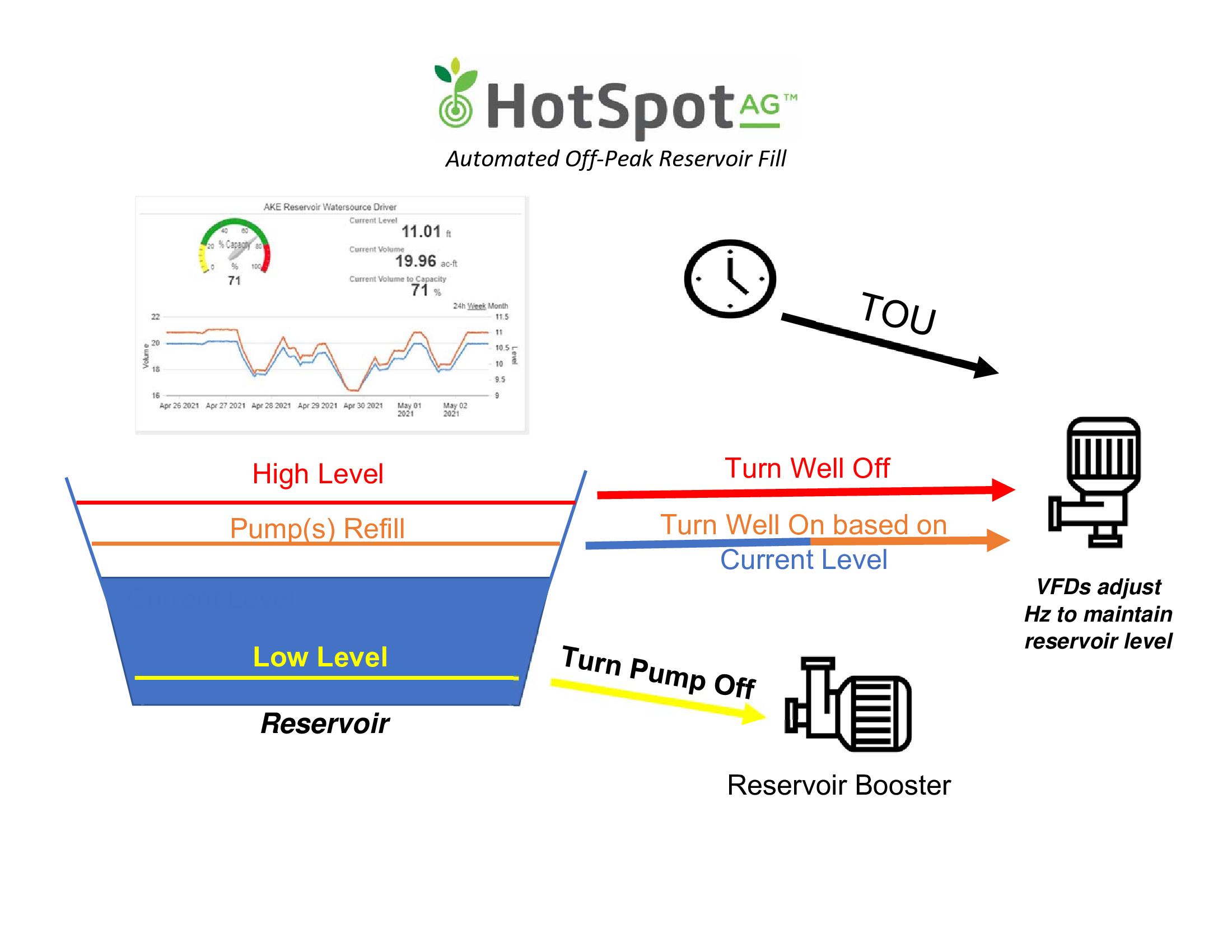
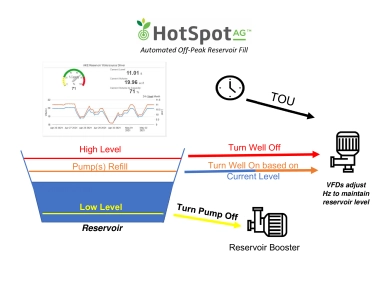
HotSpot AG utilizes years of farming backgrounds to understand the needs that growers go through. One such grower, Blake Mauritson, details the process of utilizing surface water with HotSpot AG. Mauritson begins by determining his final allocation, followed by running budgeted scenarios of surface water usage throughout the season. If all goes well, he would allow himself flexibility with the available surface water and have some left over in his sinking reservoir by the end of summer. “The beauty of it is with the autofill with time of use buttons [and] the ability to monitor the reservoir. I call [my district] early season, maybe 20 inches and I’ll just get a continuous flow of 20 inches into the reservoir. If we see some heat spikes coming up or I need to pump up the water a little bit rather than change my flow into the reservoir, my wells will just basically supplement the reservoir.”

Mauritson continues to highlight the significant benefits he experiences with the utilization of automation. For instance, Mauritson explains how his wells run 4-6 hours a day with automation in comparison to his neighbor who runs his wells continuously for four days, 24 hours a day. This leads to him being able to cut electrical power by 50% by operating outside of Time-of-Use. Mauritson explains, “Automation saves me a ton of time. Being able to schedule that water is huge. I don’t have to have anybody turn that pump on. I schedule the water with [my water master] and when I tell him I want 40 inches, I know I’m getting 40 inches…and you know the ability to adjust the vfd’s is a huge bonus too.”
For many growers, peace of mind is a luxury when it comes to managing the many moving parts in irrigation operations. As Mauritson explains, “The biggest benefits are knowing the system is running and that it is running the way that it is supposed to be. If it’s not running the way it’s supposed to be running, then I know. I know as quickly as I can log on or get an alert.” He adds, “You know the ability to monitor telemetry for the soil moisture preps is also one of those things, and till you have it, I don’t think you really appreciate being able to watch your water move through your solar profile and be able to make those kinds of adjustments.”
Looking Ahead
With a strong water year projected ahead, surface water will be playing a role in grower’s operations. With the challenges that it presents, automated solutions can provide numerous remedies such as the reduction of labor demands and flow of readily available information about ongoing water usage. Similarly to Blake Mauritson’s experience, growers that utilize automated irrigation understand that the aches and pains with water management no longer need to be a part of their daily routine. As more growers continue to optimize their operations, best practices will evolve to reflect the success that comes with irrigation automation.